Mozambique

ETC Activities

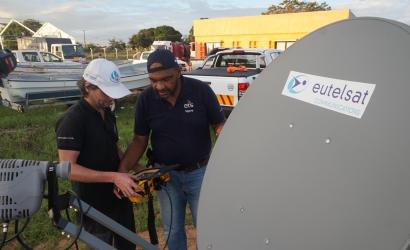
Weeks of heavy rain since December 2025 have caused severe flooding across Mozambique, damaging roads, bridges, water reticulation, telecom networks,  and electricity infrastructure, thereby disrupting essential services. In response to a government request, the ETC, though not yet activated, deployed an ICT Coordinator on 25 January to provide advisory support, assess ICT needs, and identify priority sites for shared telecom services for humanitarian responders.

Current Operations
Asset 681
Emergency
Key Documents
SitRep
Asset 772
Infographic
Asset 767
SitRep
Asset 772
SitRep
Asset 772

ICT Profile

Country background
Country name
Mozambique
Capital city
Maputo
Name of national disaster management agency

National Institute of Disaster Management 

Name of telecommunications ministry

Ministry of Transport & Communications

Name of telecommunications regulator

Instituto Nacional das Communicações de Moçambique

Population

36,208,815

Country narrative

Mozambique’s vulnerability to climate change is a function of its location and geography: large areas of the country are exposed to tropical cyclones, droughts (every three to four years) and river/coastal storm surge flooding. This vulnerability is heightened by the country’s 2,470 km of coastline and socioeconomic fragility. More than 60 percent of the population lives in low-lying coastal areas, where intense storms from the Indian Ocean and sea level rise put infrastructure, coastal agriculture, key ecosystems and fisheries at risk. Although migration to urban areas is rising, two-thirds of the population still resides in rural areas with limited access to electricity, improved drinking water and sanitation. Forty-five percent of the population lives below the poverty line and 70 percent depends on climate-sensitive agricultural production for their food and livelihoods. Increased frequency and severity of intense storms, droughts and floods are likely to exacerbate these development challenges. Over the last two decades, climate change has intensified the frequency and severity of floods, cyclones, droughts, and disease outbreaks, turning environmental hazards into chronic development threats. For example, El Niño conditions in 2015–2016 caused the worst drought in 35 years, reducing food availability by 15 percent. Food insecurity caused by the drought worsened in 2017 with Cyclone Dineo, Cyclone Idai in 2019 and Cyclone Freddy in 2023, which damaged crops and destroyed infrastructure. Mozambique experiences recurrent, large‑scale flooding—events now worsening due to climate‑driven extreme rainfall, upstream runoff, and dam releases. In December 2025, exceptionally heavy rains triggered nationwide flooding by January 2026, with Gaza and Maputo provinces hardest hit. Mozambique’s economy is anchored in agriculture, mining, natural gas, and emerging service sectors. Over the past decade, Mozambique has undergone notable digitization efforts supported by government initiatives, international financing, and private‑sector investments.
 

Currency

Mozambican metical

Key ICT statistics
Fixed-telephone subscriptions per 100 inhabitants

0.2

Mobile-cellular subscriptions per 100 inhabitants

15.463 million

Fixed (wired)-broadband subscriptions per 100 inhabitants

0.2

GSMA mobile connectivity index score

35.7

3G coverage % of population

86%

Regulations and rules
Regolations/Rules
Type of regulation
Disaster management
Description

The purpose of this law is to delineate responsibilities of the government, the Coordinating Council for Disaster Management and Risk Reduction, as well as create the Coordinating Entity for Disaster Management and Risk
Reduction

Type of regulation
Telecommunications
Description

The purpose of this law is to define the general framework for the sector in order to keep the market liberalized in an atmosphere of competition and convergence of networks and services.

Type of regulation
UAV
Policy name
Description

There are active drone regulation laws in Mozambique.
Communications service providers
Mobile network operator (MNO)
Company name
Tmcel
GSMA HCC signatory
Yes
Parent company name (majority holding)
Telecomunicações de Moçambique (TDM) and mCel, Tmcel is the state-owned operator.
Service description
Services: Offers mobile voice, 3G/4G broadband, fixed-line telephony, and ADSL internet. Fixed broadband subscriptions were 19,753 in 2012, with minimal growth since.
Coverage map (provide URL)
-https://www.gsma.com/coverage/#309
Mobile money service available
No
Fibre optic network
No
Voice and SMS services
Yes
3G/4G data services
Yes
Mobile network operator (MNO)
Company name
Vodacom Mozambique
GSMA HCC signatory
Yes
Parent company name (majority holding)
Vodacom Group South Africa
Service description
Services: Offers mobile voice, 3G/4G broadband, and M-Pesa (mobile money), with 8.6 million subscribers and 5.9 million M-Pesa users as of 2023.
Coverage map (provide URL)
-https://www.gsma.com/coverage/#549
Mobile money service available
Yes
Mobile money service info
Service is called M-pesa mobile money
Fibre optic network
Yes
Voice and SMS services
Yes
3G/4G data services
Yes
Mobile network operator (MNO)
Company name
Movitel
GSMA HCC signatory
Yes
Parent company name (majority holding)
Vietnam's Viettel Group and Mozambique's ruling party Frelimo
Service description
Services: Provides mobile voice, 3G/4G broadband, and data services, with a focus on rural areas. Operates extensively in underserved provinces like Zambezia and Niassa.
Coverage map (provide URL)
-https://www.gsma.com/coverage/#3958
Mobile money service available
No
Fibre optic network
Yes
Voice and SMS services
Yes
3G/4G data services
No
Internet service provider (ISP)
Company name
Vodacom Mozambique
Service description
Services: Offers mobile 3G/4G broadband, and M-Pesa (mobile money), with 8.6 million subscribers and 5.9 million M-Pesa users as of 2023.
Fibre optic network
Yes
Internet service provider (ISP)
Company name
Motivel
Service description
Services: Provides mobile 3G/4G broadband, and data services, with a focus on rural areas. Operates extensively in underserved provinces like Zambezia and Niassa.
Fibre optic network
Yes
Internet service provider (ISP)
Company name
Tmcel
Service description
Services: Offers mobile 3G/4G broadband, fixed-line telephony, and ADSL internet. Fixed broadband subscriptions were 19,753 in 2012, with minimal growth since.
Fibre optic network
No
Internet service provider (ISP)
Company name
World Mobile
Service description
Services: Uses aerostats (tethered balloons) to deliver mobile broadband, powered by blockchain for community ownership and profit-sharing.
Fibre optic network
No
Internet service provider (ISP)
Company name
Starlink Mozambique
Service description
Services: Provides satellite-based internet with speeds up to 250 Mbps, targeting rural and remote areas.
Fibre optic network
No
Internet service provider (ISP)
Company name
TVCABO
Service description
Cable & fiber internet + TV services.
Fibre optic network
Yes
Internet service provider (ISP)
Company name
Paratus Mozambique
Service description
Enterprise fiber, wireless, satellite, data center & cloud services.
Fibre optic network
Yes
Humanitarian telecommunications systems
Network type
other
Network name
National Early Warning & Emergency Telecom Systems
Managed by
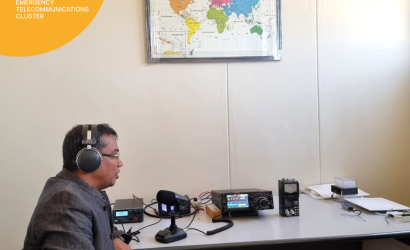
The system is jointly operated by INCM and key disaster-management and sectoral agencies: INGD (Disaster Management) CENOE (Emergency Operations) INAM (Meteorology) Ministries of Health, Defense, Interior Regional Water Administrations and MNOs.
Description
Mozambique launched a landmark nationwide emergency communications platform on 27 October 2025, enabling real‑time, geo‑targeted population alerts during disasters. Key capabilities include: Geo‑located SMS alerts. Interactive Voice Response (IVR) calls
Agencies using the network
INGD (Disaster Management) CENOE (Emergency Operations) INAM (Meteorology) Ministries of Health, Defense, Interior Regional Water Administrations
Network type
other
Network name
National Communications Institute (INCM) Emergency Telecom Initiative (2025)
Managed by
National Communications Institute (INCM)
Description
The National Communications Institute (INCM) reinforced national preparedness by launching the Natural Disaster Alert Platform via SMS and Voice, part of the national Big Data system. Key Features: Supports mass geolocated alerts (SMS/IVR).
Agencies using the network
INGD (Disaster Management) CENOE (Emergency Operations) INAM (Meteorology) Ministries of Health, Defense, Interior Regional Water Administrations
Network name
UN’s Security Communications System (SCS)
Managed by
United Nations Department for Safety and Security (UNDSS)
Description
The UNDSS VHF network is part of the UN’s Security Communications System (SCS) used to ensure safety and command‑and‑control for UN staff operating in insecure or infrastructure‑poor environments. Because Mozambique has areas with unreliable MNO coverage.
Agencies using the network
UNICEF; WFP; UNHCR; IOM; OCHA; WHO; UNFPA